Square Footage: x SF
Construction Cost: not available
Location: Seattle, Washington
Client: King County Wastewater Treatment
Pump Building Seismic and Architectural Upgrades – Project Description
The Pump Building is a critical three level process facility that supports major wastewater operations at South Plant. With approximately 19,800 square feet of occupied space—one level above grade and two below—the building houses complex mechanical systems, electrical infrastructure, and essential personnel areas. Its plan is organized into process and non process zones, including an NFPA classified area with dedicated access to support safe operations and regulatory compliance.
The lower levels contain the bar screens, pumps, grinders, motors, and a large electrical room, while the original at grade level historically accommodated the control room, crane hall, screenings access, switchgear, HVAC systems, and staff spaces. A dramatic, interconnected process hall spans all three levels, featuring a high bay roof, a traveling bridge crane, and large floor openings that allow equipment to be lifted and maintained efficiently. The pump gallery—defined by its canted Z shaped concrete roof beams and skylights—remains the building’s largest and most distinctive interior volume.
A Comprehensive Seismic and Architectural Renewal
The project delivers a major structural and architectural modernization focused on seismic resilience, operational efficiency, and improved staff accommodation.
Seismic and Structural Improvements
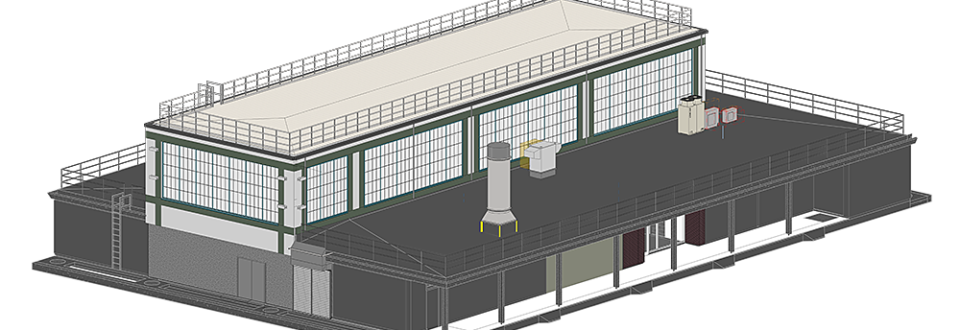
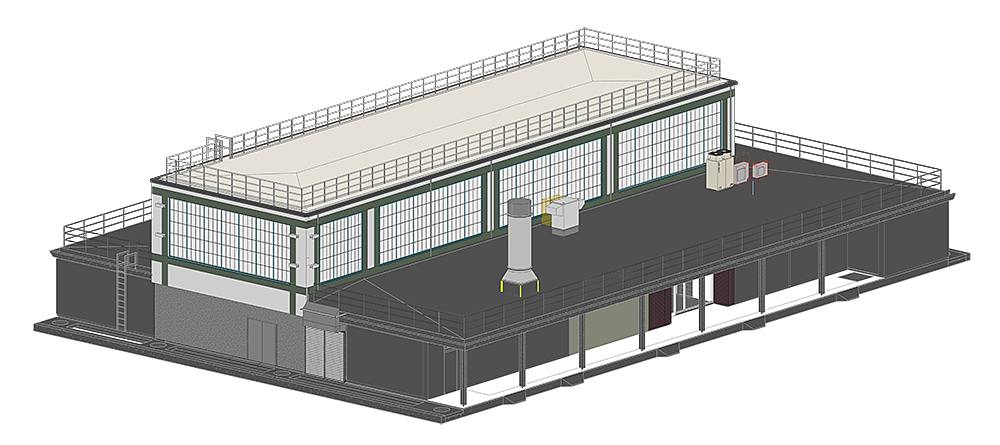
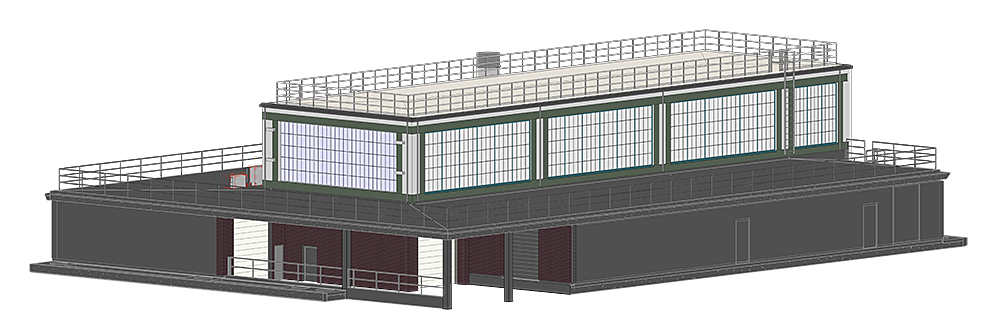
A key component of the upgrade is the replacement of the existing concrete high bay roof with a new steel framed roof structure designed to meet current seismic standards. Reclassifying the building as Type IIB construction allows the use of lighter weight steel framing and cladding, reducing seismic mass while improving long term performance. The new roof is elevated to provide the required clearance for a new bridge crane and is designed to support future photovoltaic panels.
Additional structural improvements include:
• A new concrete shear wall at the main entry, replacing an existing glazed wall and providing an opportunity for integrated public art.
• Relocation of the north exit door to avoid conflicts with new seismic bracing.
• Fiber reinforced polymer (FRP) strengthening at the south loading dock, with careful reconstruction of the brick cladding and upgraded insulation to meet current energy code requirements.
Daylighting and Energy Ready Design
The existing skylight system will be replaced with clerestory windows on three sides of the new high roof, using translucent panels to bring abundant natural light into the central bay. This upgrade enhances visibility, reduces reliance on artificial lighting, and improves the overall quality of the work environment.
The roof is also designed to accommodate future solar panels, with safe access and integrated drainage that matches the existing system.
Personnel Area Modernization
To support a more diverse future workforce, the project includes a thoughtful reconfiguration of the personnel areas. Existing restrooms and locker rooms are reorganized to provide:
• Enlarged women’s locker rooms with appropriately sized lockers.
• A consolidated men’s restroom and locker room.
• A new all gender restroom to support inclusivity and operational flexibility.
Storefront walls facing the crane hall will be replaced with insulated assemblies to improve thermal performance and separate conditioned staff areas from the process environment.
Environmental and Site Considerations
All improvements occur within the existing building footprint and comply with the site’s 30 foot height limit. Construction staging is planned to avoid impacts to a mature cluster of trees at the northwest corner of the site, preserving existing landscape character.
This project strengthens a mission critical facility through resilient structural design, improved daylighting, energy ready infrastructure, and inclusive staff amenities—extending the building’s service life while enhancing the daily experience of the people who operate it.